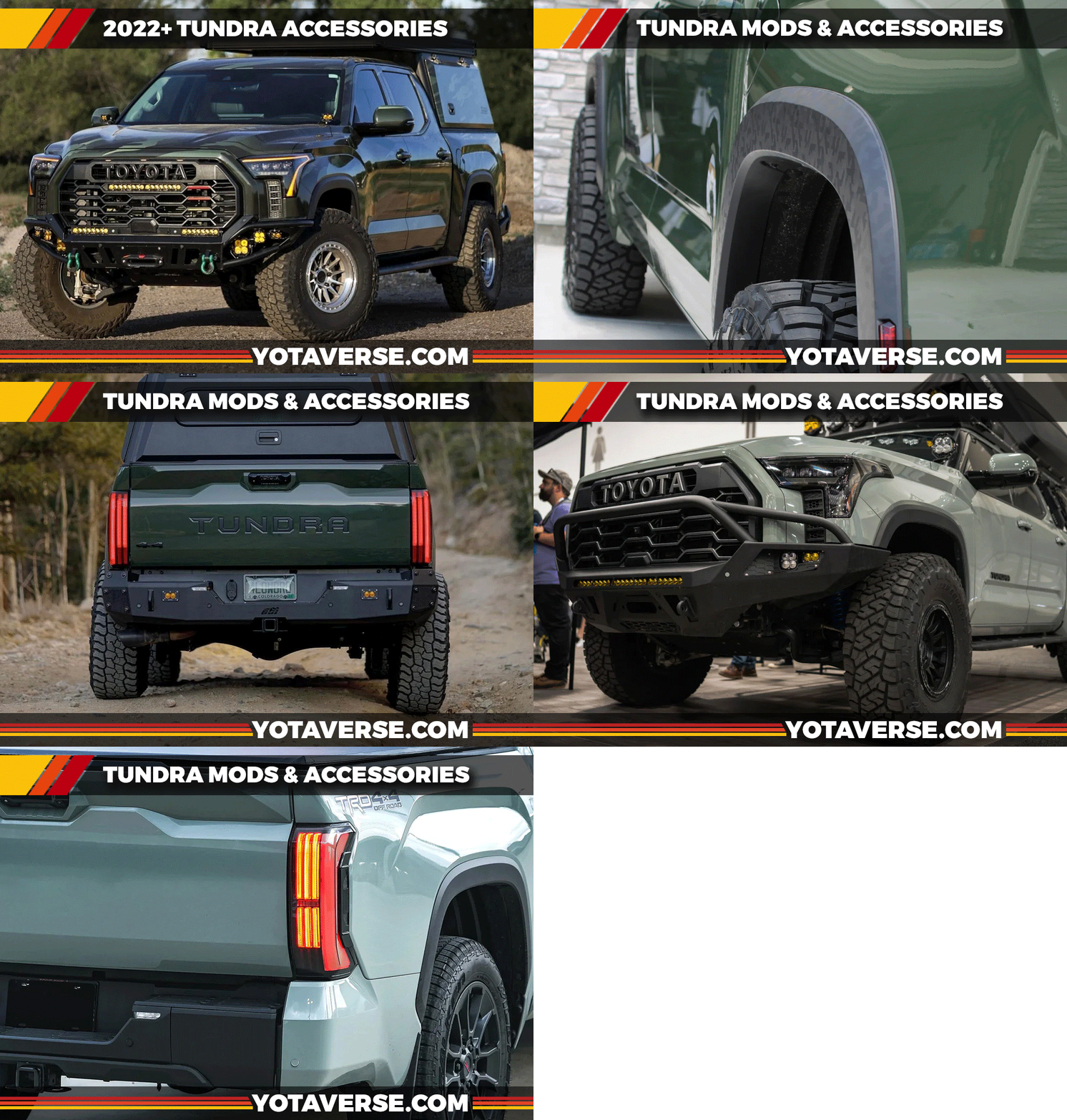
Let me start off by saying that, personally, I love this truck. It’s got power, it’s got luxury, it’s got comfort, and it’s got the technology. But is it the greatest truck ever? Is it the truck to end all trucks? Is it the best truck out of all the current modern full-size trucks? I would honestly say no — but I still love it anyway.
I’ve spent a lot of time watching the chatter on Facebook pages, Reddit, forums, and more to put together the top 10 reasons people say they hate the new Tundra.
1. Questionable New Powertrain
It’s no secret that the 3.4L twin-turbo V6 i-FORCE has had, and in some cases is still having, reliability issues. It is not the 5.7L V8 that would easily roll past 200k miles like it was nothing. These issues have left a sour taste in some owners’ mouths and have, in some ways, stained the reputation of the Tundra name.
2. Fuel Economy
The 3.4L i-FORCE engine averages around 17–18 MPG city and 22–24 MPG highway. The hybrid model follows pretty much the same numbers. The hybrid system was never designed primarily to improve MPG, but instead to improve the torque curve and overall throttle response. While fuel economy is better than the last generation, it still doesn’t touch the numbers that other brands’ small diesels are putting down.
3. Price
The starting MSRP is $41,260, with the top-end TRD Pro coming in at $72,565. After taxes and fees here in California, that TRD Pro can easily be around $80k out the door without dealer markup. For about the same price, you could get a Ford Raptor. That brings up the question: is the TRD Pro actually the better truck?
4. Complexity of Factory Tech
Some owners have reported issues with the infotainment system freezing and needing to be rebooted. The wireless charger barely charges a phone. There have also been reported issues with the digital gauge cluster. On top of that, there is a recent recall related to moisture intrusion in the new LED tail lights.
5. Interior Quality Concerns
Some parts of the interior can be noisy. This includes a creaky center console, rattles in the glove box, and a popping noise from the sunroof. There have also been occasional reports of leaks, often tied to clogged or unmaintained drain channels.
6. Active Aero
The front active air dam that deploys automatically is great in theory, but it can get damaged by debris on the freeway. When this happens, it can throw a check engine light, which leads many owners to install a delete or bypass module.
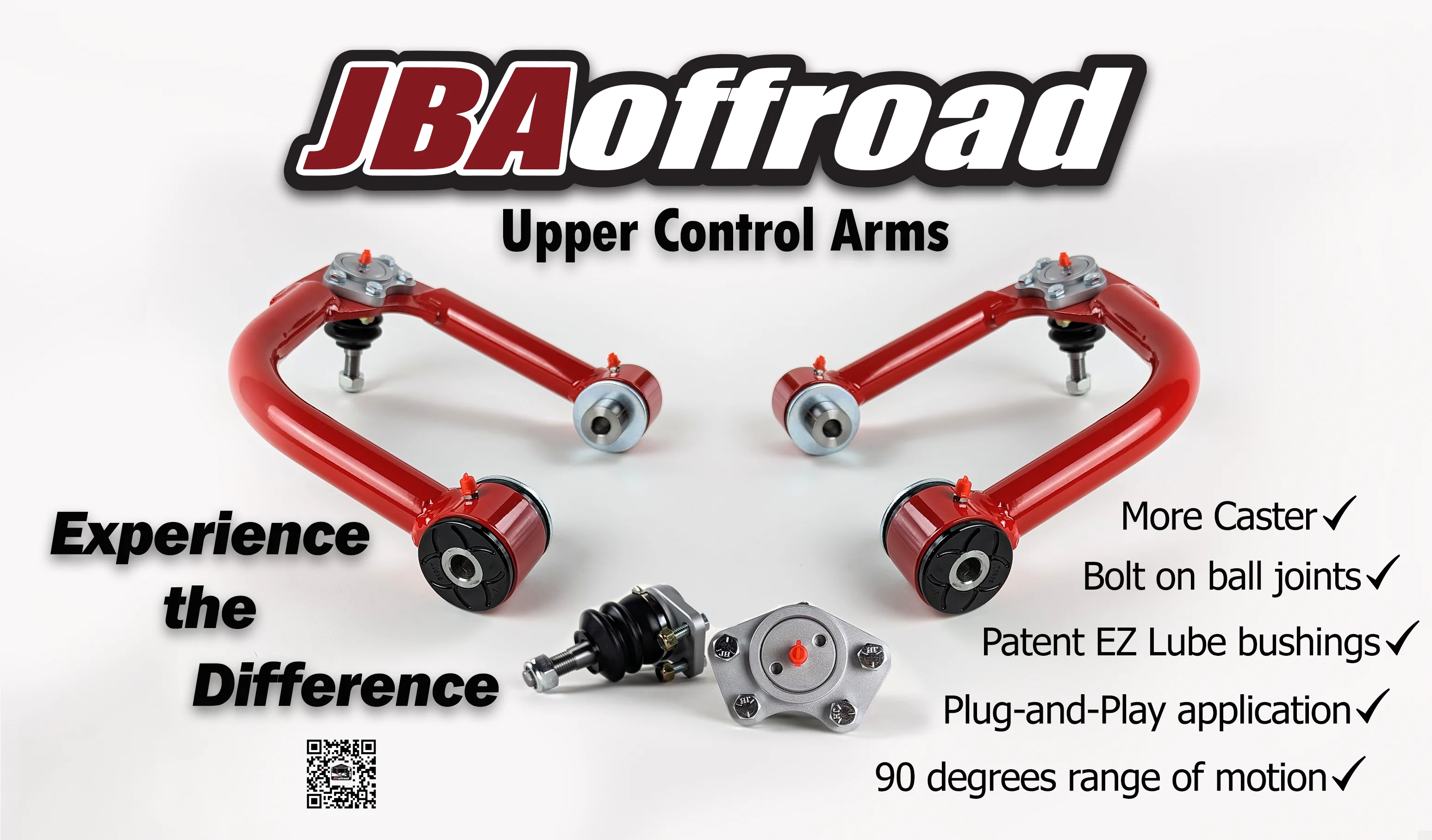
7. Suspension Sag
The rear coil springs ride great and are smooth since they are not leaf springs and are designed to be progressive. However, leaf springs traditionally handle weight better than coils, and as a result, the rear can sag under load.
8. Aftermarket Support Lacking
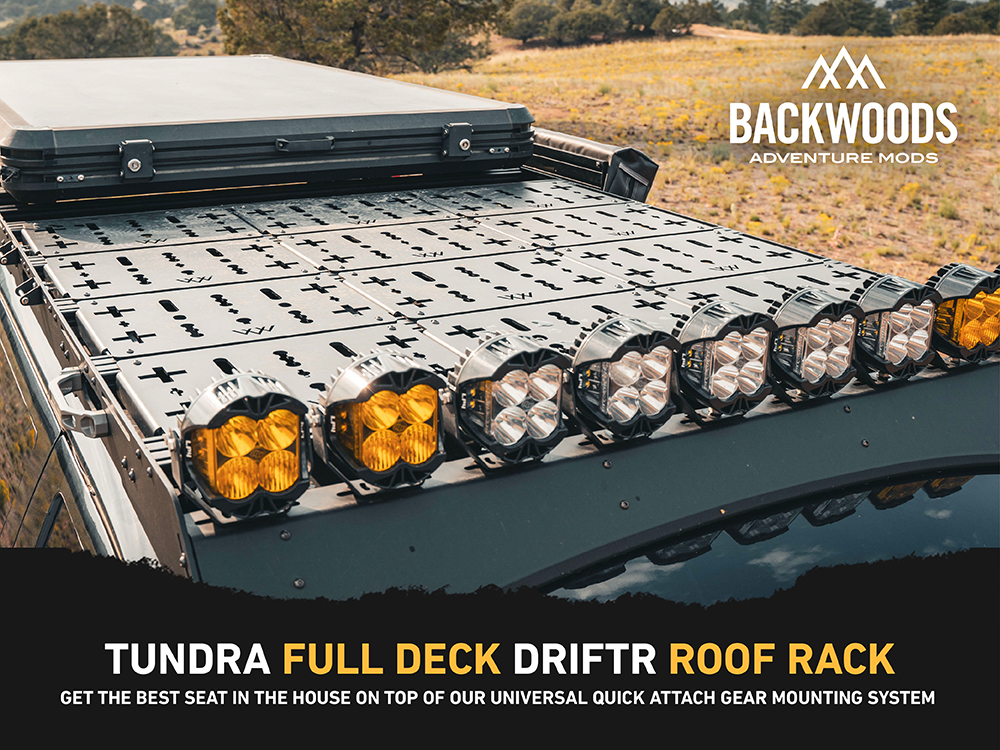
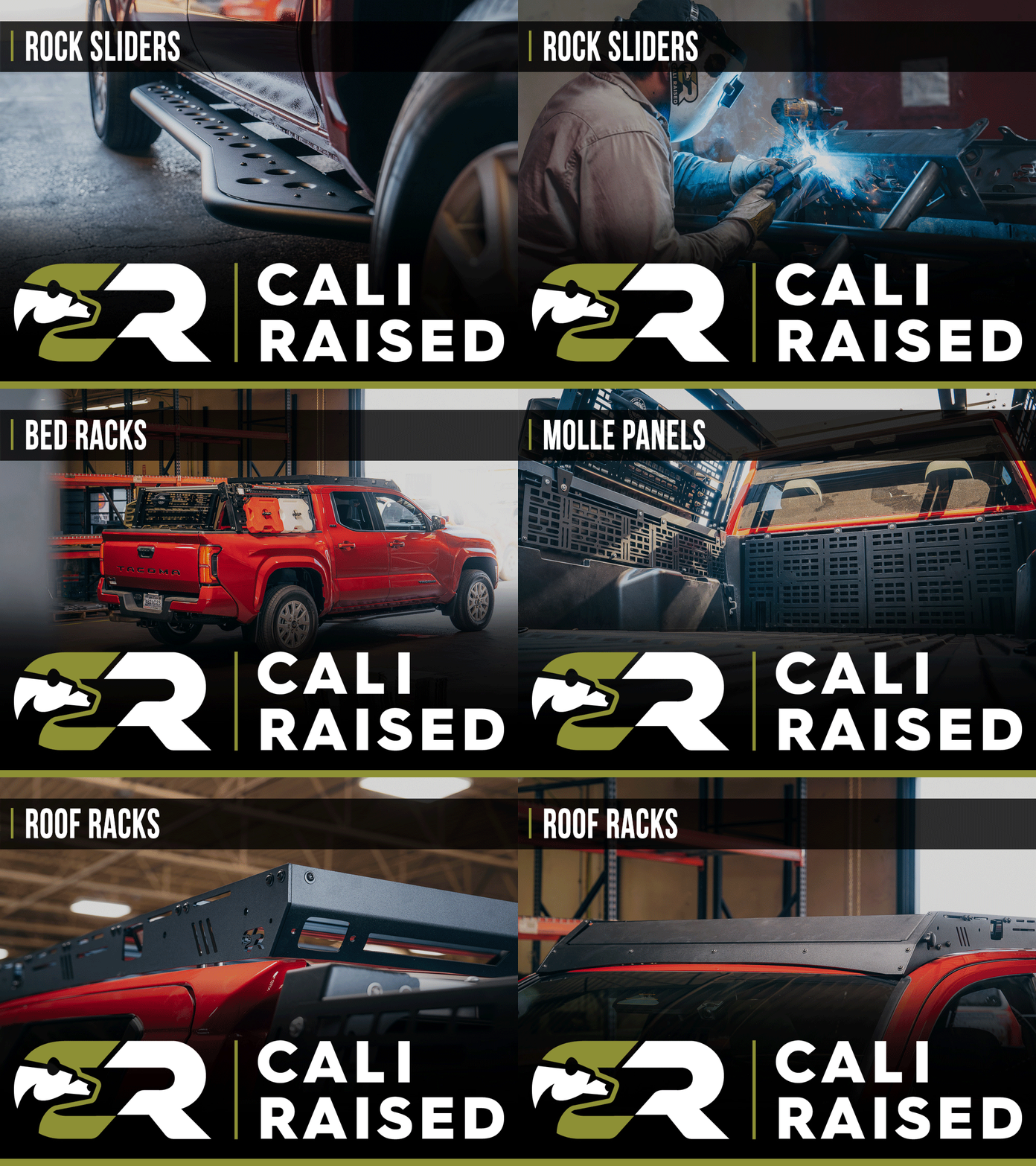
A lot of Tacoma owners move to a Tundra as their family grows, but the Tacoma aftermarket is massive. If you want sliders for a Tacoma, you have endless options. With the Tundra, the options are more limited. Still better than some other brands, but not nearly as plentiful.
9. Power Numbers Compared to Others
The 3.4L V6 i-FORCE Max engine makes 437 hp and 583 lb-ft of torque. These are strong numbers and better than much of the competition, but it doesn’t say V8, which affects perception for some people. When you compare it to trucks like the Ford Raptor R making around 720 hp and roughly 640 lb-ft, or the Ram TRX with 702 hp and 650 lb-ft of torque, Toyota simply isn’t competing at that extreme performance level.
10. Is It Worth the Money?
The truck market is more competitive than ever. With tighter EPA regulations, better technology, stronger branding, and improved styling across the board, if you’re standing there with $70k to spend on a truck, you truly have endless options. That makes it harder for some buyers to choose a Tundra over the competition.